MUSIQUE RADIO


She Drives me Country
Brandon, Mike, Ajax

It look's like you don't have Adobe Flash Player installed. Get it now.

AJR interviewed in Germany for Tracksandfields.com


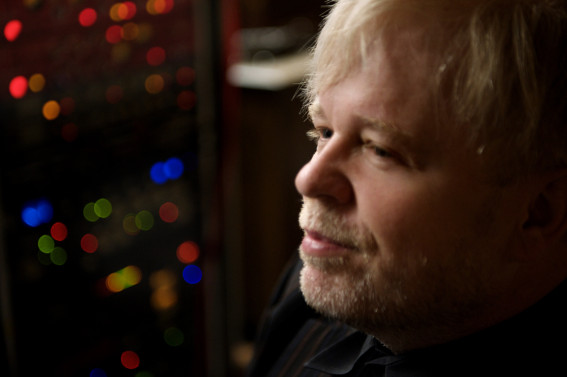
Producer Profile : Anthony J. Resta

Transcript of Interview for "Tracksandfield.com"
(http://www.tracksandfields.com/blog/2010/producer-profile-anthony-j-rest...)


Welcome to our new blog category: “Producer Profiles.” Here we’ll feature interesting producers from all over the world, delving into their production techniques, studio equipment and the business of being a producer.

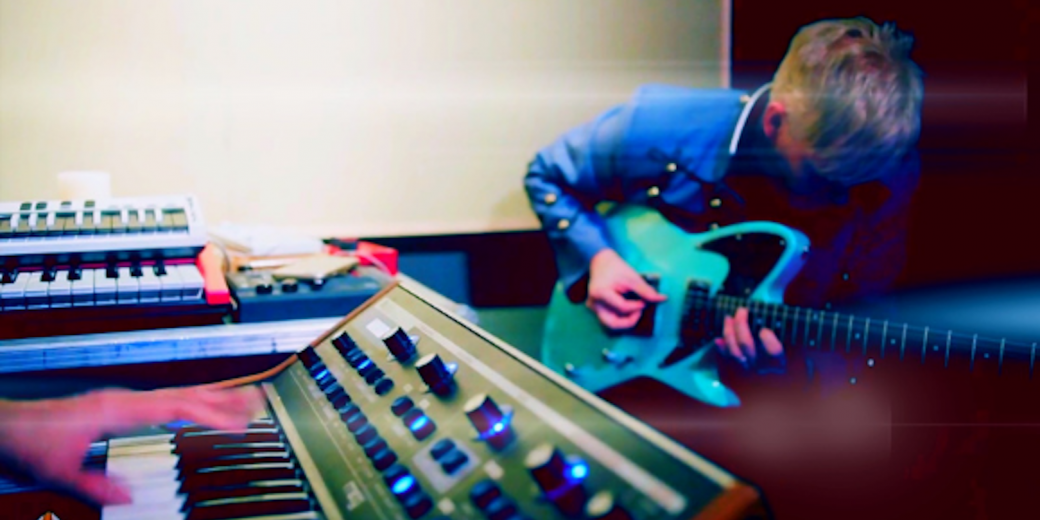
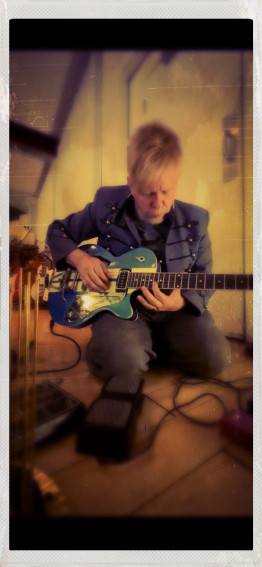
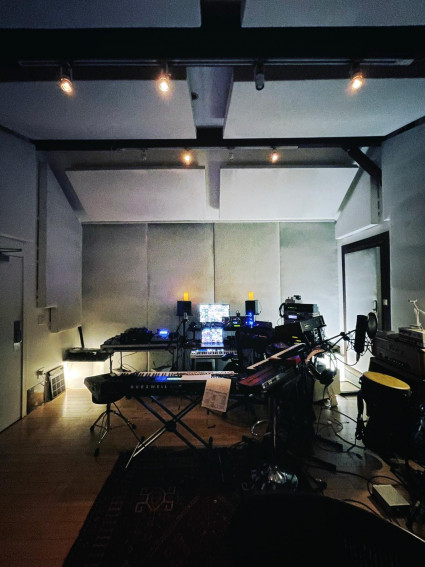
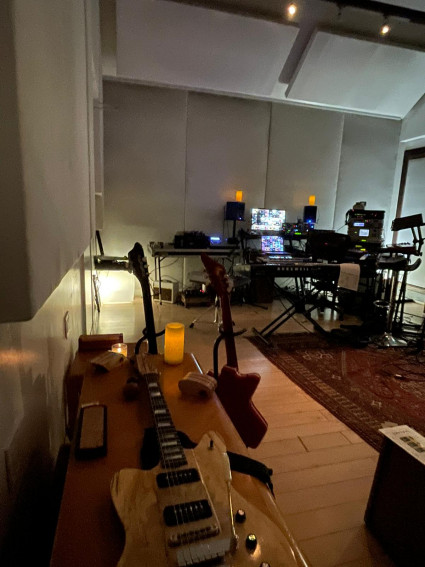
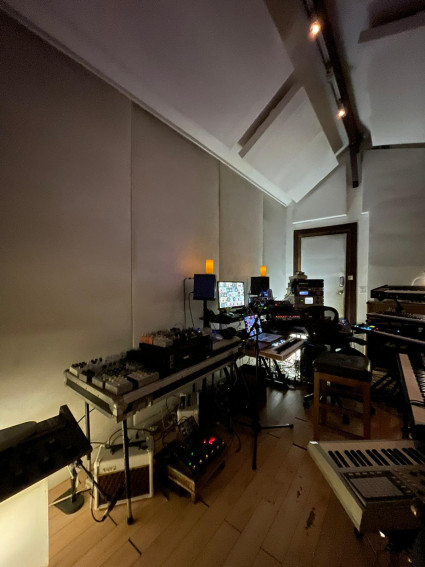
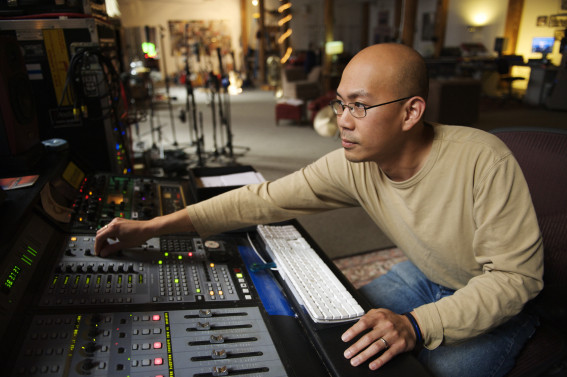
First in line is producer Anthony J. Resta (a.k.a. Aja Ray-O-Vaque). He’s the owner of “Studio Bopnique” (www.bopnique.com), a newly expanded 3700 square foot large rustic loft, tucked away beneath an old mill complex north of Boston. The studio is Anthony’s “secret lair” where he and his long time engineer Karyadi Sutedja hide like “musical comic-book hero’s in a Beat Cave.”

Anthony has worked with Duran Duran, Collective Soul and Megadeath to name but a few, and will be receiving his 11th certified RIAA award for his programming and production work on the Twilight film soundtrack, reason enough for us to ask for a behind the scenes insight into his amazing work…

Who are your influences and which historic record would you most like to have produced?
My influences are extremely diverse. Some would include The Beatles, Pink Floyd, Radiohead, 60’s Motown, The Partridge Family and The Monkee’s all the way to Amon Tobin, Squarepusher, John Lee Hooker, Duran Duran, Jimi Hendrix, Timbaland, Mutt Lange, Brain Eno, George Martin….I guess I could go all day.
Dark Side of the Moon would be a nice historical record to have produced (considering it was on the Billboard Charts for 741 weeks in total).

Where did you learn your trade and on what kind of equipment?
I  pretty much lived under a grand piano at Courtlen Recording in Hanson, MA.  I learned from an amazing team of producers and engineers who worked there. Bob St. John, Fred Danner, Tom Soares, Chris Lannon, Paul David Hagar, Paul Cervone, etc.  We recorded all analogue, all old school.

What are your two most used microphones in the studio?
I love ribbons!  Crowley and Tripp, Coles, Royer. I love Earthworks, B and K,  Telefunken U47 , etc. I also like crappy taxi cab mics and old RCAs.

What’s your most used/favourite vocal chain (microphone/pre/convertor?)
Telefunken U47, Neve 1073 and the Lavry Blue 4496-4 is a great converter.

Let’s assume a band has about 1000€ to spend on recording equipment. Can you give recommendations on what to buy (assuming they already have a computer and sequencer software)?
The best mic pre and the best mic they can get for that. That would take research. It wouldn’t be enough money, though.

What’s the cheapest piece of gear you own? Do you still use it?
A burned out light bulb, and yes I use it as a shaker.

Do you ever use tape? If so, do you use it for tracking, mix down or both?
I love tape for tracking. It’s a luxury these days. Drums sound best on tape to me.

If you record digitally, what sample rate do you use and why?
44.1, it’s where it ends up, so why jump around? Until they change the delivery to the customer it makes sense to me. I don’t record many projects that have quiet dynamic parts, I do mostly rock and pop, so it works for me.  It’s all about the song and performance to me. People anyways listen mostly to MP3s on their crappy ear buds.

Do you ever work “off the grid” in your productions?
We do this when it’s a seasoned pro ensemble which has done tons of live playing together. The feel is incredible, and I love music that breathes. We often do an elaborate tempo grid to replicate that feel.


Rate the following aspects of a recording in order of importance (1 being the most important):
Microphone choice and position
[2] This is how to capture the playing ability.
Playing ability
[1] Without this there is nothing worth recording.
Room acoustics
[4]  This variable can be a curse or a blessing – both can yield interesting and viable results.
Instrument quality
[5] Crappy guitars and drums can sound really cool, if and when all the other variables are in order.
Mic preamp


[3] To make what you capture with the microphone optimum.
What do you use for summing?
I started attending mastering sessions at Vlado Mellor’s and noticed that there were a lot of Dangerous Music components in his system. I started asking Vlado about it and basically he turned me onto Dangerous Music. Seeing Vlado using Dangerous gear, I figure a guy who has 21 records that he had mastered up for Grammys in one year, if he’s using the stuff it’s gotta’ be good. I am not a scientific wizard or anything, I just know what I like and the Dangerous 2-Bus has made a big difference in the sound of our mixes. We have a bunch of different configurations that we use to buss audio out of Pro Tools, through the outboard and then to the Dangerous 2-Bus, where the final mix is summed to stereo. Naturally we do the automation all in Pro Tools so it’s super easy to recall a mix.


On average how long does a complete album production take you from tracking to mix down?
I like to take the most of a day for preproduction per song, then it’s 2.5 days to track, 1.5 days to mix, and half a day later on to print and fine tune the mix. That adds up to 5.5 days per song. X10 for an album.

How important do you think it is to have a management deal as a producer?
It’s important, if you’re dealing with major labels and major management companies for the artists. In these scenarios you need a seasoned pro to make sure you are being treated with respect, get your back end, etc.

How many points do you typically get for an album you produce?
1 to 4, with 3 being the norm. Usually escalation at gold and platinum of .5 to 1 point.
What does this generally equate to in terms of royalties and how long does it typically take before you start to see a return?

Royalties are calculated in one of three ways: as a percentage of the retail price of the album; as a percentage of the wholesale price or published price to dealer which is known as PPD; or as a percentage of the record company’s receipts. One percent of the retail price of an album that retails for $14.99 amounts to 14.99 pence. This, theoretically, translates to $100,000 per million units. However,  1% per million units may be closer to the 75,000 dollar amount by the time you factor in  packaging deductions, free goods and the other ways that record company’s will reduce your royalty. I once waited nearly 7 years to collect royalties on a record due to the nature of “Recoup-ment”.

Is the decline in physical record sales affecting your work, and are you having to diversify to survive the changes?
Major label dollars used to be my main source of income, but now it’s shifting back to Indie labels and artists. In my prime I was making at least 30% more than in average now, but I enjoy the freedom and the ability to make fearless recordings that are not trying to fit a generic cookie cutter mold. It’s a great time to make innovative non-generic music. I believe that the cream rises to the top. If you have good songs, play well and make a great recording, people will eventually notice. Perseverance is the key.

What project are you currently working on?
Too many to list here. Please go to the news section at http://www.bopnique.com.

Can you tell us about any planned projects for the future?
We just received an RIAA certified double-platinum award for  the”Twilight” film soundtrack,  I really want to start doing more writing with artists and building  relationships with film and TV people as well as advertising agencies looking for cutting edge innovative products. I can see that being the focus on the next era of my career. I also really want to work with TOM PETTY.  I just became a member of a cool composer group. Tom Petty’s live drummer Steve Ferrone is a member.  We have a face book page at: http://www.facebook.com/pages/ANTHONY-J-RESTA-ERIC-ALEXANDRAKIS-STEVE-FE...

Thanks a lot for the interview!